Following our time in Rotterdam it was time to head south to Belgium. En route we made a pit stop at Westmalle Brewery. I am a big fan of beer in general, but the Trappist beers of Belgium are amongst my favorite styles. Westmalle is one of the few trappist breweries in the world and it was a pleasure to be able to stop here. If you are unfamiliar, Trappist beer is brewed by Trappist monks and there are only 10 certified breweries in the world. Although you cannot visit the Abbey or the brewery, there is a nice cafe across the street run by the Abbey. Here you can drink the beer and also eat cheese made by the monks. The staff was very friendly and spoke English fluently. The beer and cheese was excellent. It’s a great place to stop if you like beer and are in the area and dogs are allowed inside.


We made our home base in Belgium in the Ardennes region. I primarily chose this area because of its World War 2 history. I’ve always had a strong interest in the history of this war and have visited many important sites during my travels over the years. This particular area has strong personal meaning because my Grandfather on my Mother’s side was a decorated soldier in the war with the 80th US Infantry Division. His division was one of many that were involved in the battle of the bulge. This battle is one of the most famous from the war and took place in the Ardennes region.
Durbuy, Belgium
Durbuy was the closest town of interest to where we were staying so we made it our first stop after settling into our AirBnB for a day. The town is small but very charming. There is a beautiful chateau at its center surrounded by cobbled streets and plenty of restaurants, cafes and shops. There is also a great bike and walking trail that runs along the Ourthe river. After arriving in town we started with a nice long walk by climbing a stairway that takes you to the top of a hill just behind the town. We followed trails and roads through the surrounding countryside before looping back to town on the trail by the river.

A section of the riverside walking and bike path in Durbuy
Once we were back in town we enjoyed a coffee and strolled around the town taking in the options before settling on a restaurant (La Vieille Demeure, solid but nothing spectacular). We ate outside in the center of town and enjoyed the beautiful weather. Following our meal with stopped at Australian Durbuy for our first Belgian waffles of the trip, topped with ice cream of course!
We really enjoyed Durbuy. It’s small but mighty and a great place to spend a nice day outdoors walking, biking, drinking and eating. I did find that almost all the restaurants seemed on the touristy side. I try to find places a little off the beaten path with a more local feel but I wasn’t seeing much of that in this town. Outside of this minor gripe, two thumbs up!


Bastogne and World War 2 History
If you enjoy history, and especially military and World War 2 history then Bastogne and the surrounding Ardennes region are a great place to visit. You could easily spend 2-3 days in the Bastogne area alone. I ended up spending parts of 2 days in Bastogne and that was enough to see the major sights and a few smaller memorials.
Bastogne was a critical strategic location during the battle of the bulge and that is why it ended up being a hotspot for WWII museums and memorials. We ended up visiting four different museums along with a couple of other sights.
The first museum we visited was the Bastogne War Museum which is probably the most visited and certainly the fanciest of the museums in the area. This is a really nice museum that takes you through the entire war starting with the reasons why it happened all the way into the post war years. This is great for all the visitors that just have general knowledge of the war. For me personally I was more interested in the battle of the bulge rather than the overall history because of the knowledge base I already possessed. Even so, I enjoyed the museum and so did Amy. It is a mixture of reading, artifacts and little “shows” that would dramatize different aspects of the war. There was also an included audio guide that followed the stories of 4 different people throughout the war and the battle.


Clockwise from left; 1) one of the show sets depicting the winter fighting conditions; 2) another show set depicting life for the civilians during the battle; 3) front entrance of the museum.
We did have two gripes with the museum. First was the audio guides. Instead of the usual input the number to hear about what you are looking at format that is typical, these guides were triggered automatically by sensors. The sensors didn’t always work or it would cut off what you were listening to when you wandered too close to another sensor. The other issue was the flow of the museum. It is designed to funnel through the story of the war and battle in chronological order and sprinkled along this journey are the “shows”. When you got to a show you had to wait outside for the next one to start and then you would end up with a big group. The entire group would then exit into the next area at the same time and you are all on top of each other. That just kept repeating. We started skipping ahead past the shows to see a bit of the next area and then go back to the show so we could skip ahead of the crowd when the show let out.
Just outside the Bastogne War Museum we visited the large Battle of the Bulge Memorial. Built by the Belgians just after the war as a tribute to the United States war effort during the battle it is an impressive sight. It is in the shape of a 5 pointed star and features the names of all the US states and all the different military units that participated in the battle.


Battle of the Bulge Memorial (left) and closeup of my grandfather’s division on the memorial (right)
After leaving the memorial we took a short drive to the Bois Jacques Foxholes. If you are familiar with the HBO series Band of Brothers that follows the US 101st Airborne division through the war then these foxholes would be familiar to you. Much of episode 6 of the series takes place in these foxholes. Located on the outskirts of Bastogne in a wooded area it is a place for quiet reflection. It was a bit surreal being in this place after watching the series and reading so much about what happened here.


A few of the Bois Jacques foxholes
The next stop was the Bastogne War Rooms museum. These former barracks and bunkers served as the US headquarters during the battle. It is famously where the US Brig. General. Anthony McAuliffe replied “Nuts” when the Germans made a request for the US forces to surrender. They really go overboard with the Nuts thing here, Amy was finding it amusing. The ground floor of the museum is pretty repetitive after going through the Bastogne War Museum. The bunkers below have little movies in them that reenact the Nuts moment. They aren’t particularly good. I’d say that this museum is skippable unless you are a diehard WWII junkie. I will say that the Bastogne War Museum sells a bundle ticket that includes the war rooms and the foxholes that is only a few euros more than entry into the war museum so it isn’t much of a financial investment.

Outside the Bastogne War Rooms
On a separate day we visited the 101st Airborne Museum. Although not nearly as fancy and modern as the war museum, this museum is full of great artifacts and pictures from the war. In the basement they have a room that simulates hiding in the basement during a bomb raid. If you are into the military history then I recommend this museum.
Our last museum was the Bastogne Barracks. If you are into military equipment from the war then this is the place to go. The museum consists of 3 different warehouses that are chock full of a combination of tanks, trucks and artillery pieces from the war. Most are beautifully restored. It’s impressive to see some of these vehicles in person. Some of the trucks in particular were quite massive. The tanks tend to steal the thunder but there were so many vehicles that were required by the military to win the war. Amy was already bored of tanks after the first warehouse, but for those of you that like that kind of thing this place is a must visit.


A few shots of the inside of the Bastogne Barracks
Luxembourg City
The area we were staying in Belgium is really close to the tiny country of Luxembourg so we decided to take a day trip to the capital city. The trip was an easy 1.5 hour drive from our place.
Before heading into the city we made a quick stop at the Luxembourg American WWII Cemetery on the outskirts. Just as with my visit to Bastogne, this was an opportunity to pay my respects to my Grandfather’s service as well as all of his fellow soldiers. I’m sure there are many men who fought alongside him in the war that are buried here. The cemetery is not as large as some of the others in Europe but it is just as powerful as the larger ones. If you are ever in Europe and find yourself near one of these cemeteries I recommend you take the time to visit. The rows of uniform crosses and Stars of David that spread across acres of perfectly manicured grass are a sight to behold and place to pay tribute.
On the lighter side, the guards at the cemetery loved Maverick but not enough to let him inside. Totally understandable since dogs like to pee on everything and Mav is no exception. As we were getting ready to leave one of the guards brought out the young son of the superintendent of the cemetery who was thrilled to meet Maverick! The superintendent came out a few minutes later and we all met him as well. We never keep to ourselves for long when Maverick is with us.


The American War Cemetery at Luxembourg
After the cemetery visit we headed into the city which did not disappoint. The old town is a UNESCO world heritage site and it is full of old world charm. We entered the city from the west and got our first glimpses of the impressive Bock Casemates. These are huge fortified walls or cliffs full of subterranean passages and bunkers. You can go inside but we did not because no dogs were allowed and time was short.
Once in the old town we strolled the streets seeing things like the Grand Duke’s Palace (the Grand Duke is the head of state). There were multiple different markets going on a few squares in the city. The streets were full of cafes, bars and restaurants. Just outside the fortified center part of the city are plenty of green spaces to walk in. We took in as much as we could before grabbing some food outside and then finally heading back to Belgium
Luxembourg City was great and I’d love to go back some time. It’s pretty small so one day is ok as a minimum. I wouldn’t stay here for a week, but 1-2 nights would be perfect if you wanted to see everything. There is also plenty to see in the rest of the country. There seems to be a lot of great castles throughout the region as well as a few different museums. Standard Europe stuff!


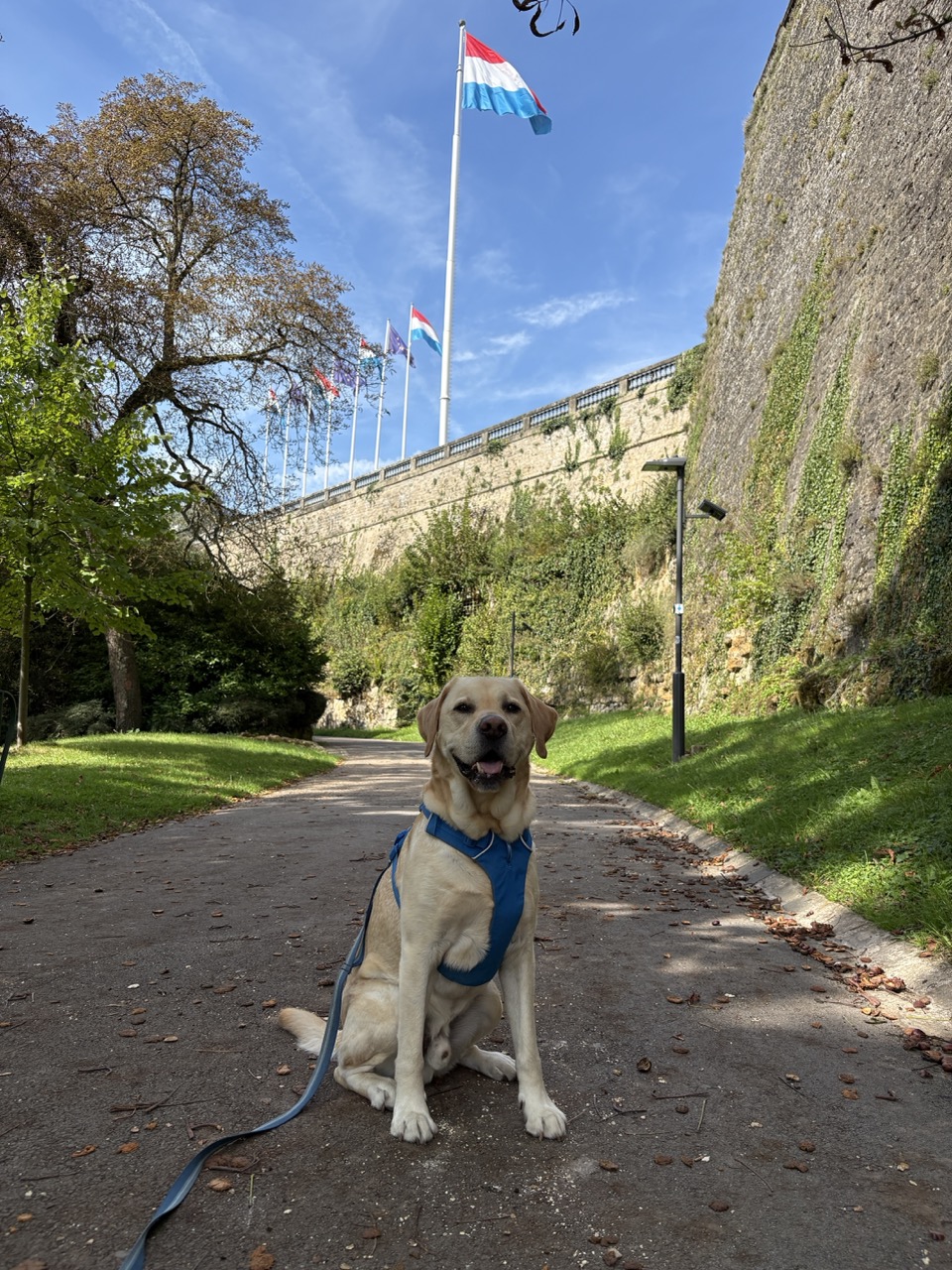
Luxembourg City
Dinant, Belgium
The last place we visited in this part of the world was the small city of Dinant on the banks of the River Meuse. This city seems to be a popular stop in YouTube travel vlogger videos for some reason. I will say it looked picturesque and it was only a 45 minute drive away so we decided to check it out.
The city itself runs along the banks of the river, but just behind on top of the cliffs looms the fortified Citadel of Dinant. The citadel offered free parking and easy access to the city via either cable car or a lot of stairs so I chose this as our starting point. Dogs are allowed in the citadel as well. The fortress was originally built in the 11th century and since then has gone through many modifications and rebuilds before finally becoming a museum. The ticket includes access to the cable car and an iPad device that serves as an audio tour that also does some virtual reality type representations of what the citadel looked like in the 1800s. It’s a little hokey but kind of fun at the same time. Otherwise it is the usual stuff you see at a place like this. Gun emplacements, powder storage rooms and the like. The best part is probably the views of the city and river below. I think it’s definitely worth a visit if you are ever here.
After touring the citadel we descended the 400+ stairs down to street level. This brought its own set of excellent views. I made a deal with Amy that if we walked down I wouldn’t make her walk up. Right at the base of the stairs is the city’s landmark, the Collegiate Church of Notre Dame de Dinant. The church is particularly impressive from the outside as it sits in front of the cliffs with the citadel above and the river in front. We took turns peeking inside since most churches aren’t keen on furry worshipers.

View of the city from the Citadel, the church is just to our right.
Exiting the church we strolled up the street to the tiny house of Adolphe Sax, the inventor of the saxophone. This tiny one room free museum is on the site where his childhood home once stood. We popped our heads in and took a quick look. Why not when it’s free? The city is obviously very proud of Sax since large saxophone sculptures can be found all over town.
That was it for sightseeing in the city for us. The rest of our time there we strolled around and took it in. Along the way we grabbed some frites for all 3 of us to share and then later a couple of Belgian beers before climbing back in the car and heading back home. It was a weekday on a chilly and overcast early fall day and many of the restaurants that are usually buzzing in the summer and weekends were closed so from that perspective we missed out a little, but the trade off is that it wasn’t crowded.
Dinant is a pretty little city with a few sights to take in. It’s a nice place to stop for a day but I probably wouldn’t go out of my way to visit here unless you have a specific interest in one or more of the sights.

Mav hanging with Adolphe Sax
Conclusion
Overall I’d say this is probably not the most exciting region to visit. The landscape is nice, but nothing you can’t see in many other places. There are certainly some charming towns and small cities but outside of Luxembourg City I wouldn’t say any are close to a must see. If you are into WWII history like I am then Bastogne is definitely worth a visit and you could easily do 2 days here. If I were to do everything again I might pick a different area but that doesn’t mean I regret staying here. The goal of a trip like this for me is to see places I would never fly across the ocean to visit for a week. Some I will yearn to come back to, others I will not. I’m interested to see how much I like other parts of Belgium in future travels. Next stop, Germany!